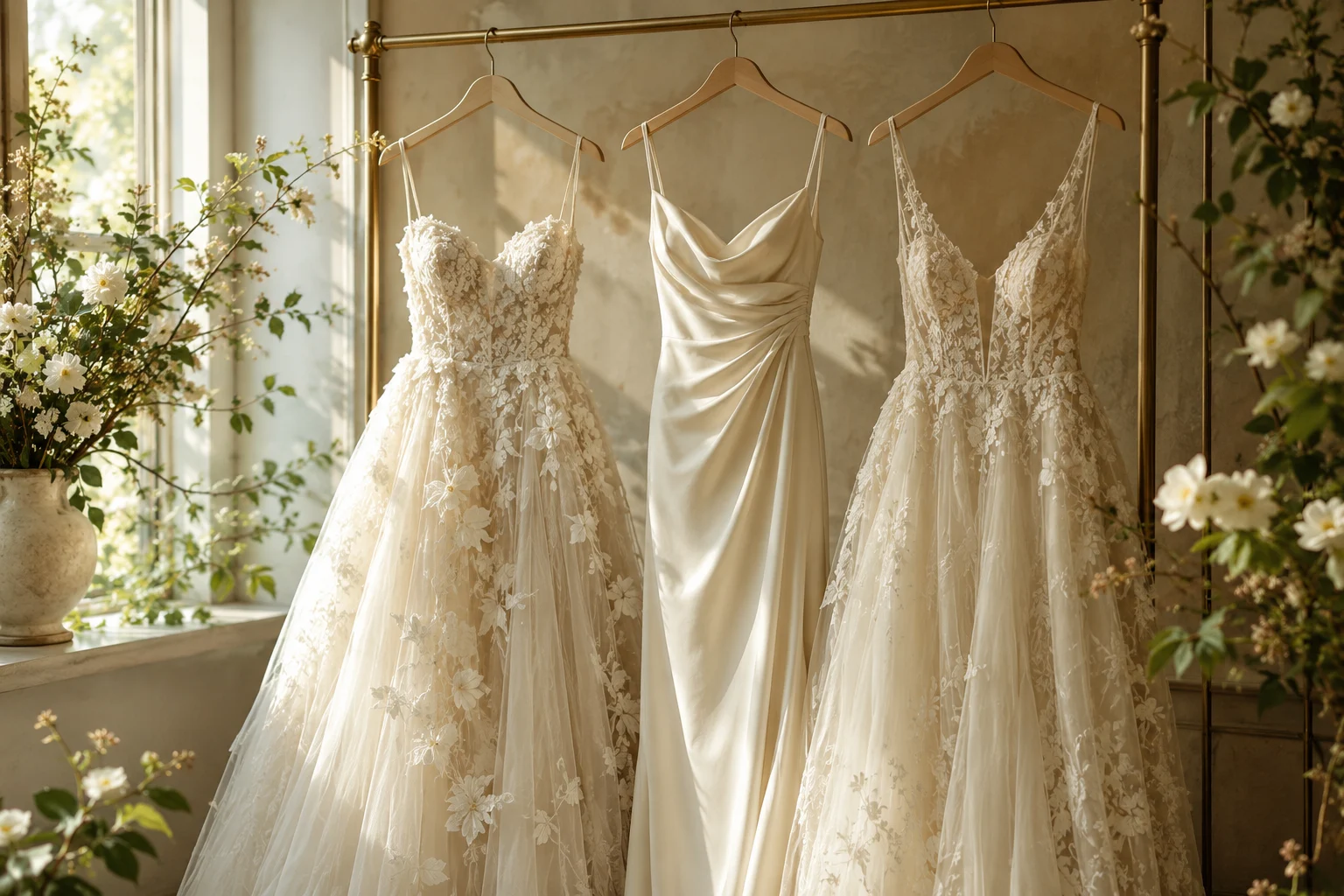
Wedding dress silhouettes describe the overall shape of a gown, especially where the skirt begins to widen and how closely it follows the body. Use those labels to compare options, then test fit, fabric, movement, and alterations. No silhouette belongs exclusively to a particular body type.
Treat the label as a starting point Two dresses with the same silhouette can feel very different. Fabric weight, internal support, seam placement, lining, and the position of the waist change both the appearance and the experience of wearing a gown. Ask to try the actual construction rather than judging only from a drawing or a model photograph.
Designers and shops sometimes use terms differently, especially for fitted shapes. Instead of debating the name, describe what you want: more room through the hips, a skirt that opens lower, or a waist that feels less defined. A clear description helps a consultant find useful alternatives.
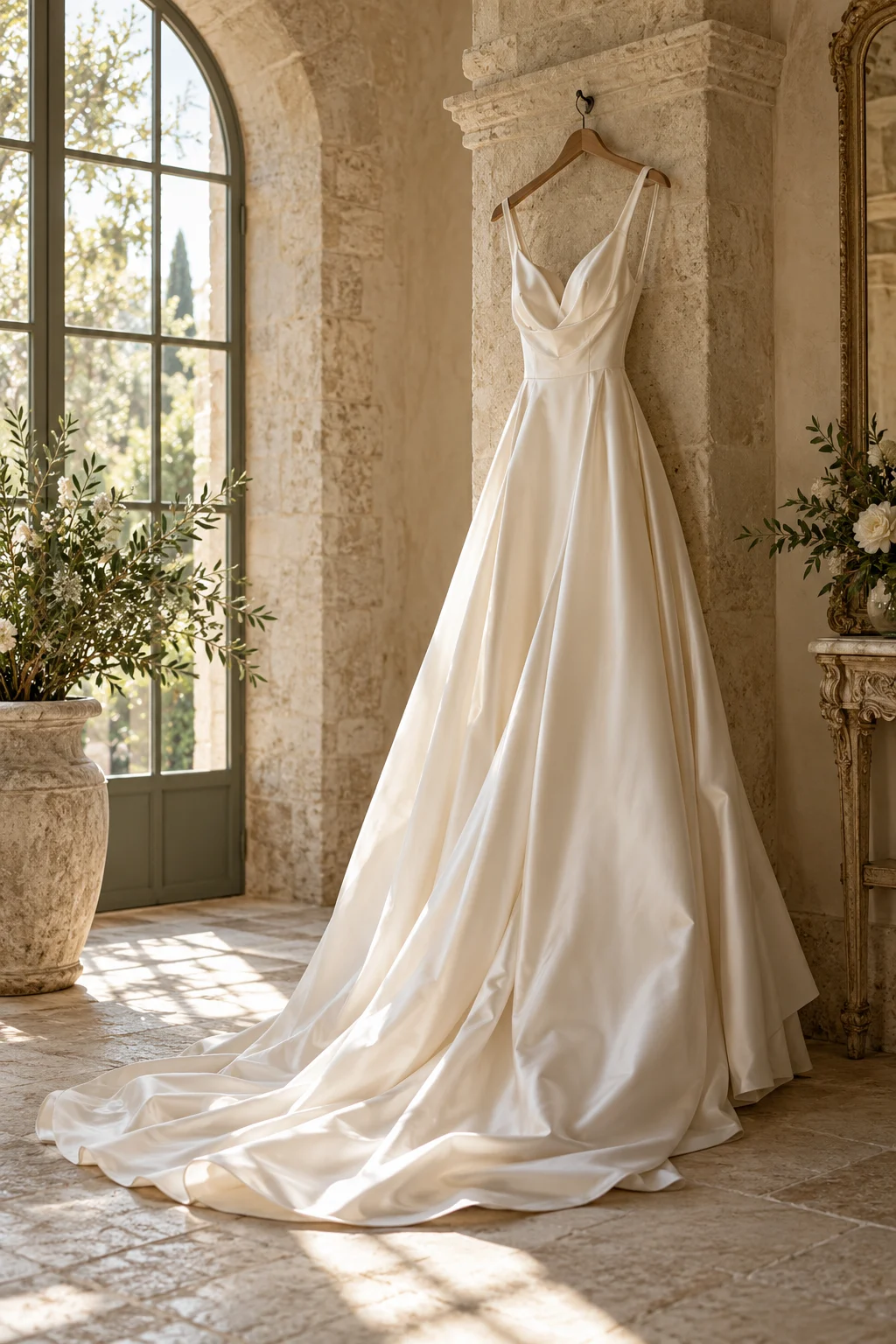
A-line An A-line dress generally narrows through the upper body and widens gradually into the skirt. The amount of volume varies from a soft, subtle flare to a fuller shape. It can be a useful reference point if you want skirt movement without the volume associated with a ball gown.
Try walking and sitting to feel how the fabric falls. A structured A-line may hold its shape away from the body, while a softer one moves closer. Ask where the skirt's volume comes from and whether any underskirt is included in the sample. That detail affects both comfort and the finished price.
Ball gown A ball gown pairs a fitted or defined bodice with a full skirt. The visual effect can be dramatic, but the weight and flexibility depend on the materials and support beneath it. A large skirt is not automatically heavy, and a lightweight appearance does not guarantee an easy wearing experience.
Check doorways, chair space, and the way you expect to move among guests. Ask how the skirt packs, travels, and bustles if there is a train. If you will need help dressing, find out how the closures work and how much time to allow without turning the morning into a rush.
Sheath and column These terms usually describe a relatively narrow shape that falls close to the body's line. Some versions are softly draped; others are tailored and structured. The simplicity of the outline can make fabric, seams, and undergarment choices more noticeable, though details differ from gown to gown.
Take comfortable strides and sit fully rather than perching on the edge of a chair. Ask about a slit, stretch, lining, or other features that affect movement. If a dress looks effortless but restricts your normal pace, discuss whether alteration can help or whether another construction would suit you better.
Mermaid, trumpet, and fit-and-flare Fitted gowns follow the body through part of the skirt before widening. A mermaid is often described as opening lower, while trumpet and fit-and-flare labels may indicate a more gradual or higher release. Retail usage overlaps, so the actual point where the skirt opens matters more than the label.
Test stairs if the shop has a safe way to do so. Sit, turn, and practice a dance step. Ask whether adding room would change the intended shape. Do not assume that a tight sample can simply be let out everywhere; available seam allowance and construction determine what is possible.
Empire and raised waistlines A raised waist seam sits above the natural waist, sometimes directly below the bust. The skirt may then fall softly or with more structure. This creates a different set of proportions, but the fit of the upper body remains important. The seam should feel comfortable while you breathe, sit, and raise your arms.
Ask where support comes from and how the bodice can be adjusted. A flowing skirt may feel easy while the upper section needs precise fitting. If you like the overall effect but dislike the seam position, try a different design rather than assuming every raised-waist gown will feel the same.
Compare construction alongside shape Use the following questions at an appointment. They help translate a visual preference into a practical comparison without relying on rules about which bodies should wear which clothes.
- Where does the skirt begin to widen, and does that point feel comfortable?
- Can I sit, breathe, walk, turn, and lift my arms naturally?
- Which parts of the sample are being clipped, padded, or supported?
- What changes are possible, and which need a specialist estimate?
- Are the underskirt, straps, sleeves, and bustle included or separate?
- How will the fabric behave in the conditions of my venue?
Understand the sample fit A clipped sample is a demonstration, not the final fitted garment. Ask the consultant to explain what the ordered size is expected to change and what will remain an alteration. Check the seller's measurement and ordering process before committing, and request the written details of any promised modification.
If the sample is too small or too large to give a useful impression, say so. You are allowed to ask for a different sample, another style with similar construction, or time to think. The purpose of trying on is to gather evidence, not to prove that you can make yourself fit the rail.
Include the whole outfit cost Compare the gown price with likely alterations, accessories, undergarments, shoes, steaming, storage, and travel where relevant. Do not treat an uncertain estimate as a fixed total. Ask what happens if your plans or measurements change, and read the order and cancellation terms supplied by the retailer.
A slightly simpler dress that fits your practical needs may give you more freedom elsewhere, but the decision belongs to your priorities. The useful comparison is between complete, wearable options rather than ticket prices alone. Keep notes so the details remain clear after several appointments.
Choose by lived comfort Review photographs only after remembering how each dress felt. A still image cannot show whether you spent the whole appointment adjusting a neckline or avoiding a full breath. Your preferred silhouette is the one that supports the way you want to move and participate.
Return to the three style words in our personal bridal style guide. Use them to narrow the choice, then confirm the order details and fitting plan. The final gown should feel like a considered expression of you, with enough room for the real person wearing it.