Your bridal style starts with the way you want to feel, the clothes you already enjoy wearing, and the practical setting of your wedding. Choose three descriptive words, test a small range of silhouettes, and compare each outfit against your real day. A clear point of view is more useful than a large inspiration folder.
Begin with your own wardrobe Look at the outfits you reach for repeatedly. You might favor a defined waist, an open neckline, soft sleeves, crisp tailoring, or loose movement. Those preferences offer clues without limiting what you can try. A wedding outfit can feel special while still respecting your familiar sense of proportion and comfort.
Make two short lists: details you enjoy and sensations you dislike. A person who loves an elegant neckline may still dislike a tight collar. Someone drawn to a dramatic train may dislike carrying extra fabric. Describing both the appearance and the feeling helps a stylist understand what matters during an appointment.
Choose three words with a practical meaning Instead of saving everything labeled romantic, choose words that guide an actual decision. Quiet, sculptural, and relaxed lead toward different choices than ornate, playful, and formal. None of these combinations is more bridal than another. The purpose is to reduce noise before you start comparing dresses, suits, separates, and accessories.
Give each word a visible expression. Sculptural might mean a clean neckline and structured fabric. Relaxed might mean a skirt that moves easily and shoes you can walk in. Quiet could mean a restrained palette rather than a lack of detail. This exercise makes your brief usable rather than merely atmospheric.
Edit your inspiration folder Collect a small set of images and write one sentence beneath each: what exactly are you noticing? Separate the gown from the model, lighting, venue, hairstyle, and flowers. A beautiful photograph can persuade you to save an outfit that has little connection to your own preferences.
After a few days, look for repeated details and remove images that pull in an unrelated direction. Keep one or two surprises to test. Treat the folder as a conversation starter, not a purchasing contract. Changing your mind after trying something on is useful information, especially if the new choice feels easier to wear.
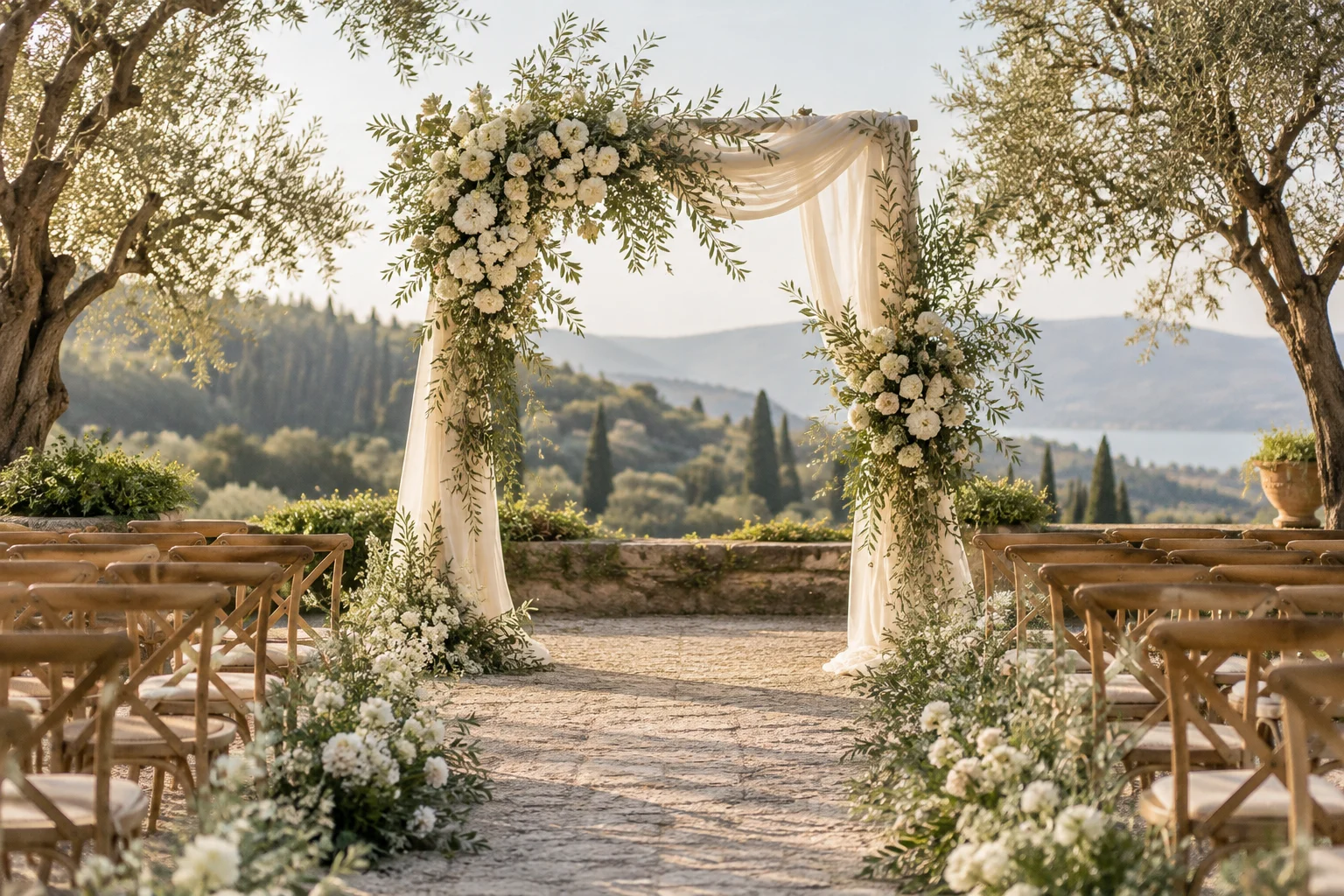
Let the wedding setting inform the outfit Think through surfaces, temperature, travel, and time spent standing. A garden path may affect shoe choice. A small ceremony room may change how you feel about a long train. A fitted sleeve may need testing with the gestures you expect to make during the ceremony and reception.
Ask the venue about stairs, sheltered routes, seating, and places to change. These details do not dictate your aesthetic; they help you support it. If you love a formal look for an outdoor celebration, a bustle, a cover layer, or a second pair of shoes may make the idea more workable.
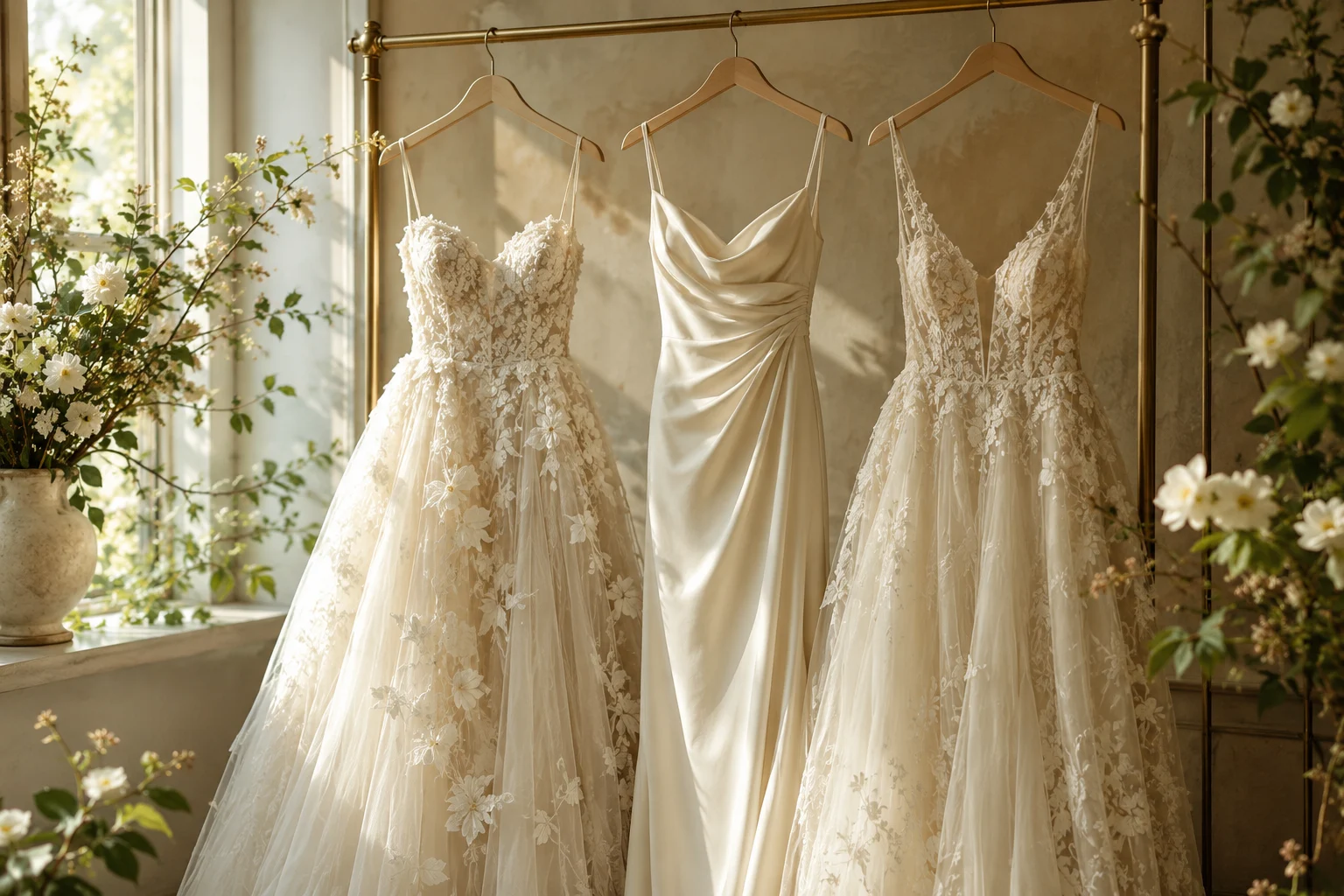
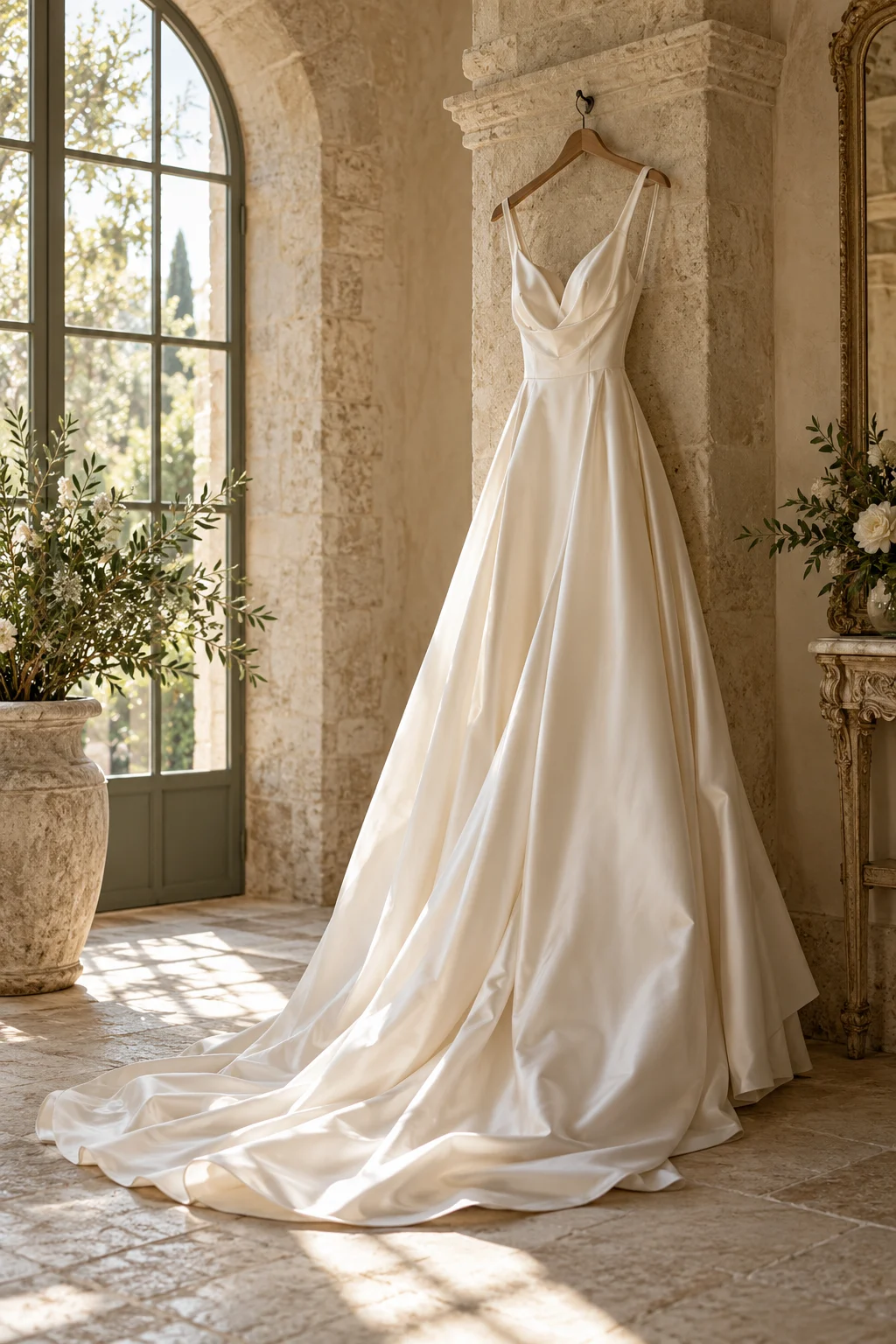
Try a small range, then compare At an appointment, begin with your preferred direction and try a contrasting silhouette for reference. Judge each outfit by movement, comfort, emotional response, and the cost of making it ready to wear. Ask permission before taking photographs, then take the same angles for each look if the shop allows it.
Sit, walk, turn, lift your arms, and try a gentle hug. Note where you need help and where you feel distracted. These movements are more revealing than standing still on a platform. Ask which fit issues are routine alterations and which would require a larger redesign, with a written estimate where possible.
A simple appointment scorecard For each outfit, record your three style words, comfort while seated, ease of movement, likely alterations, and complete outfit price. Add one sentence about how you felt before anyone else commented. This keeps feedback from becoming the only record of the appointment.
Build the whole look gradually Choose the main outfit before committing to every accessory. A detailed neckline may need little jewelry. A simple dress might welcome a veil with texture or a family piece. Try accessories together in daylight and indoor light so you can judge color, shine, and proportion rather than assuming all ivory shades will match.
Bring intended undergarments and shoes to fittings as instructed by the alterations specialist. Ask about attaching a veil, supporting a train, and managing closures. Photograph the finished arrangement and make a short dressing note for whoever will help you. Small practical decisions can protect the calm feeling you wanted at the beginning.
Handle opinions without losing your direction Invite feedback from people who can describe what they see without telling you who to be. A helpful question is, “Does this look like the three words I chose?” Another is, “Can you see that I am comfortable?” These are more useful than asking everyone to vote for a favorite.
If opinions become overwhelming, pause before placing an order. Review your notes alone or with one trusted person. Share a clear boundary with the group: you welcome practical observations, while the final decision belongs to you. A thoughtful appointment does not require unanimous enthusiasm.
Know when the decision is ready You do not need tears, instant certainty, or a cinematic reveal. Look for an outfit you enjoy wearing, a price you understand, a realistic delivery plan, and a clear alterations path. Before paying, read the order details, measurements, cancellation terms, and collection arrangements supplied by the seller.
Your style is ready when the choices work together and leave you free to participate in the day. For shape comparisons, read our wedding dress silhouettes guide. Then close the inspiration tabs for a while. There is value in letting a considered decision become your own.